
Lawrence County Court Record Requests
Try MyCase first. It gives a free public index and the Chronological Case Summary. Any document links open to remote access. If the paper you need is missing there, turn to Amy Voorhies, Lawrence County Clerk, whose office serves Circuit, Superior I, and Superior II from Room 31, 916 15th Street, Bedford, Indiana 47421. The published phone is 812-275-7543. At the counter you can inspect available public files in person. Before calling or mailing, confirm the current process, the total charge, accepted payment, and delivery method, because Lawrence County publishes no copy-order form and no turnaround promise.
- Search MyCase and note the court, cause number, CCS date, and document title.
- Download a linked public document if a plain online copy is enough.
- Call the clerk for a missing paper, file inspection, mailed request, or certification.
- Ask the court reporter for a hearing or trial transcript.
- Send bulk or compiled-data requests to the Indiana Office of Judicial Administration.
Lawrence County Clerk
Room 31, 916 15th Street
Bedford, IN 47421
812-275-7543
The official clerk page confirms the countywide filing and records role.
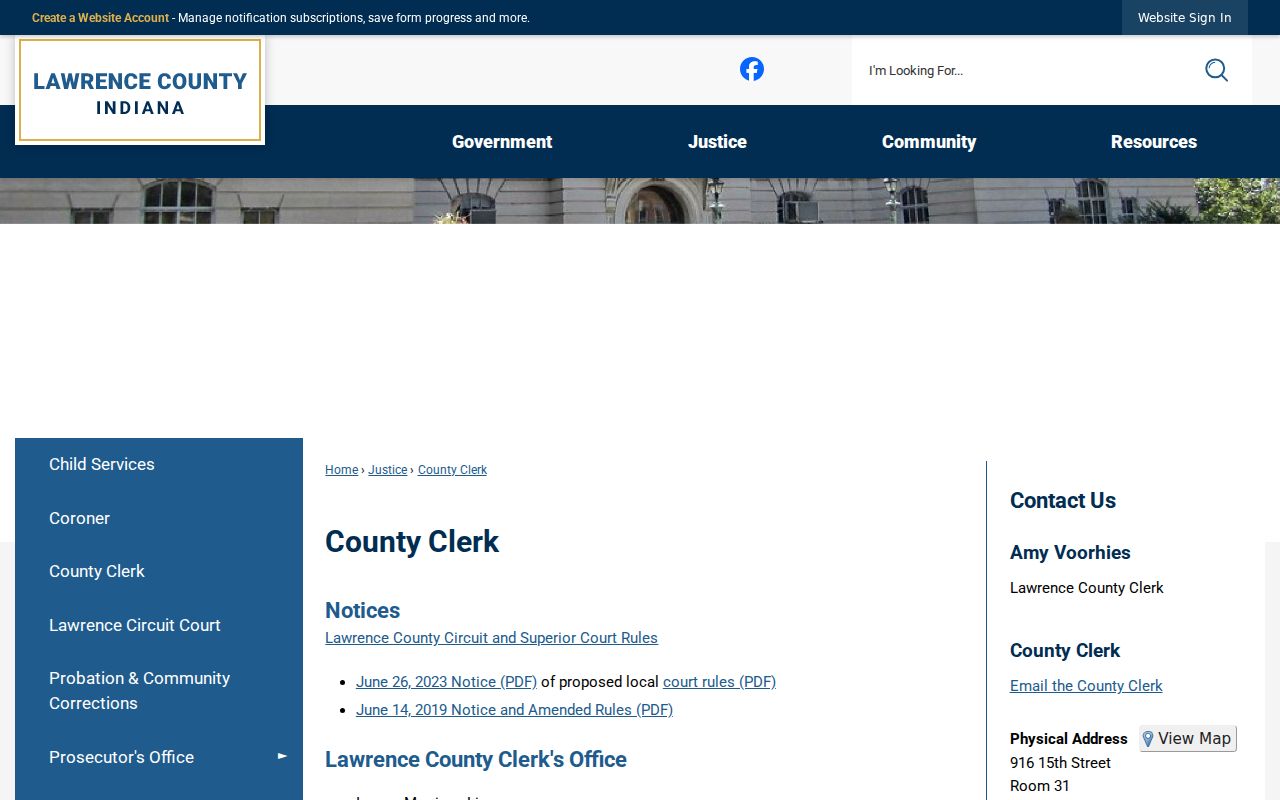
That office is the practical official-record fallback whenever the Lawrence County digital file falls short.
Three Lawrence County Record Layers
Three related layers sit inside Lawrence County records. They do not swap for one another. The Chronological Case Summary is the ordered event list, covering filings, orders, settings, and dispositions. Behind those entries sit the filed documents themselves: pleadings, judgments, returns, exhibits, and other papers. Some are online. Others live only in the maintained court file at the clerk's office.
- Chronological Case Summary
- The public event index, often called the docket.
- Filed document
- A pleading, order, judgment, return, or other paper in the case file.
- Certified copy
- A reproduction authenticated under the clerk's seal.
An image capture, a CCS printout, or an unsealed PDF does not count as a certified copy. Before you pay for anything, ask the receiving office which form it actually wants.
Kinds of Lawrence County Court Records
What a Lawrence County case file holds depends on the court and the case category. Common contents include complaints, charging papers, motions, responses, service returns, notices, orders, judgments, and disposition entries. Probate and guardianship files may carry inventories or orders. Civil matters lean toward pleadings and judgments. Criminal records often include charges, hearings, and disposition entries. Confidential portions stay protected no matter the category.
| Record | Best first source | Key limit |
|---|---|---|
| CCS or docket | MyCase | Not the certified official file |
| Filed pleading or order | MyCase link, then clerk | Remote link may be absent |
| Certified copy | Lawrence County Clerk | Seal and copy charges apply |
| Hearing transcript | Court reporter | Preparation rates and access limits apply |
| Bulk court data | Office of Judicial Administration | Written terms and fees may apply |
Lawrence County Public-File Limits
How far does public access go? The county FAQ says files are public. The exceptions are juvenile cases and adoptions. Positive photo identification is required to look at or obtain copies of juvenile cases. Indiana Access to Court Records Rules then add broader confidential categories. Sealed, mental-health, treatment, privileged, and protected personal-identifier material can all be confidential. A public case can still hold pages that are not public. The Lawrence County clerk FAQ covers public files, identification, and payment.
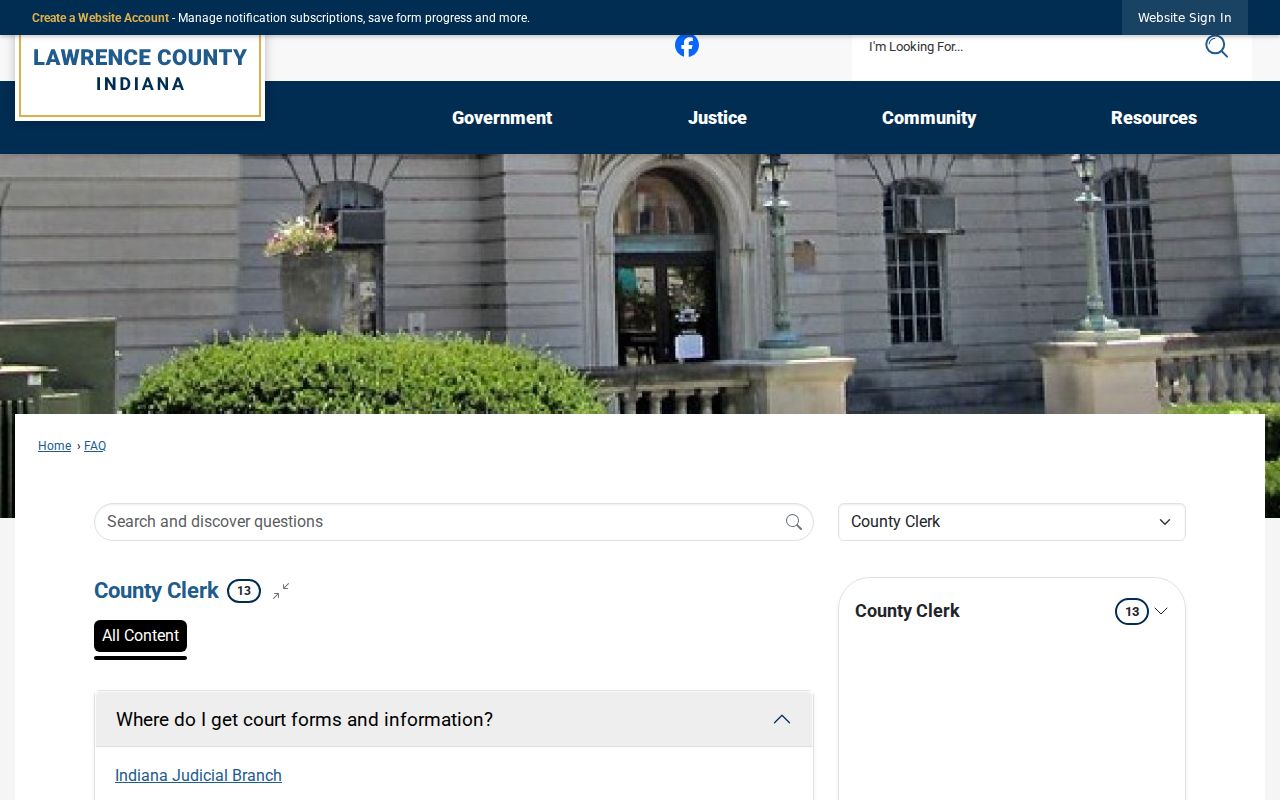
That local notice gets a requester ready for the counter. State rules still decide whether a specific record can be released.
Lawrence County Court Records: What They Contain
Read a full Lawrence County public file as a set, not as loose entries. The CCS shows when an event was recorded. A motion is not an order granting it. A proposed order is not a signed judgment, and a hearing entry is not a transcript. Always check the newest entries and the text of the operative order before drawing a conclusion.
| Identity | Court identifier, cause number, caption, type, and filed date |
|---|---|
| Parties | Public names, roles, and counsel |
| Case history | Chronological filing, service, hearing, order, and disposition entries |
| Financial events | Public assessments and payments, subject to update lag |
| Documents | Public pleadings and orders when linked or released by the clerk |
Grab identifiers with the Lawrence County docket search before asking for any particular paper.
Lawrence County Copy Fees and Certification
Indiana statutes set a fee baseline. Preparing a record copy runs $1 per legal or letter page. Each certificate under seal costs $1. Preparing and recording a judgment transcript for a real-estate lien costs $3. A county may reduce a copy charge. Treat these figures as a floor rather than a final Lawrence County total. Ask whether certification wording, mailing, format, or advance payment changes the quote.
| Item | Published baseline | Confirm |
|---|---|---|
| Plain record copy | $1 per page | Any county reduction or format charge |
| Certificate under seal | $1 each | How the clerk labels certification |
| Judgment transcript | $3 | Recording and intended use |
| Card payment | Additional service fee | Current amount |
The clerk takes cash, money orders, cashier's checks, and employer's checks, but not personal checks. Credit, debit, and prepaid debit cards work too, though they carry a service fee whose amount is not published.
Lawrence County Transcript Costs
A transcript captures spoken proceedings. It comes from the court reporter rather than the clerk. Lawrence local rules list routine or private rates up to $5.50 per page. A $50 minimum applies for eight pages or fewer. A copy of a prepared transcript costs $2 per page. Media charges run $3 for a disc. They run $8 for a USB drive and $7 for a binder. Indigent rates differ under the rule. These prices are not the ordinary clerk copy fees. Give the court reporter the cause number, court, proceeding date, and the portion you need. Sealed exhibits, medical records, and treatment records may require a court access order first.
Older Lawrence County Files and Statistics
Lawrence County joined Odyssey in 2017, so online depth varies for older matters. A missing link does not prove a document was never filed. Help the clerk instead. Give an approximate year, case type, party name, and old or current number. The office publishes no local retention or microfilm schedule. The official 2024 trial statistics page offers county-level reports rather than individual case files.
Statistics describe court workload, but a named case record still comes from MyCase or the clerk. The county trial-statistics interface gives another official aggregate view.
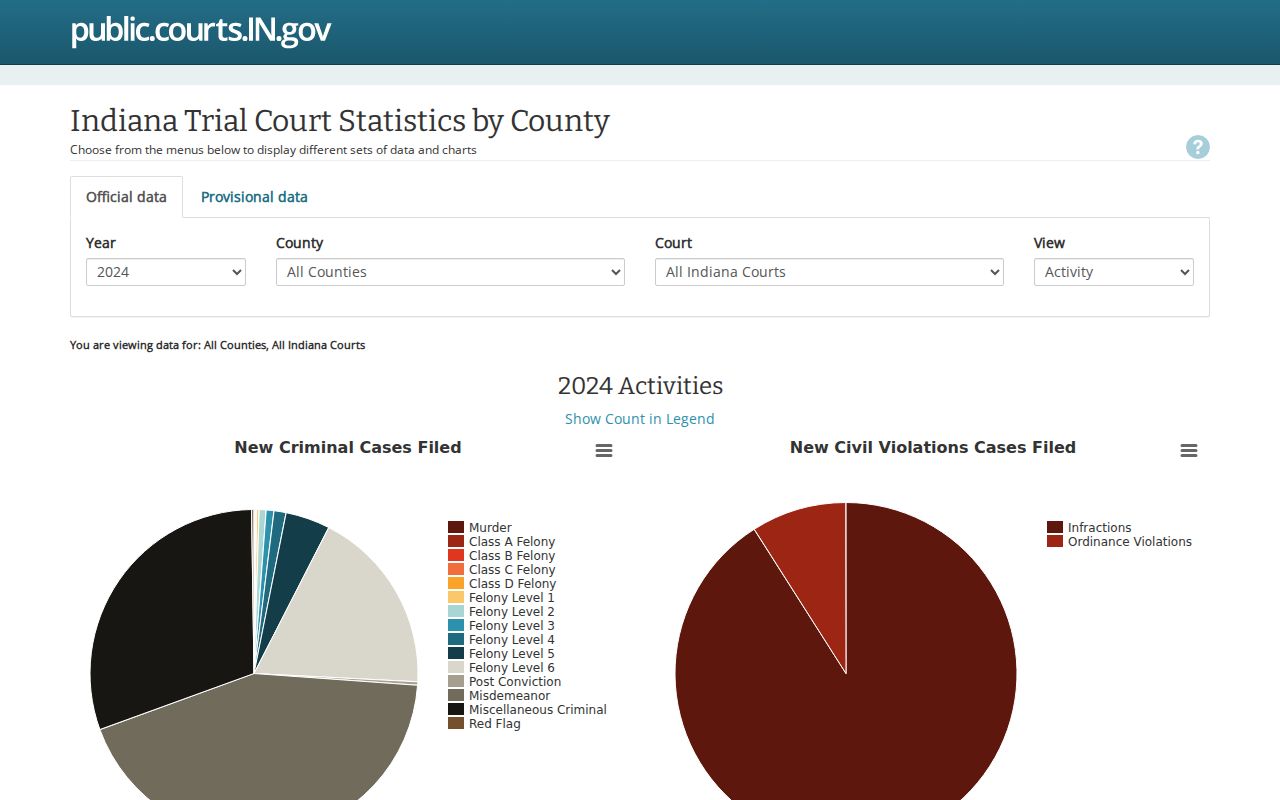
Never confuse its totals with the CCS and documents for one Lawrence County matter.
Access Rules for Lawrence Court Records
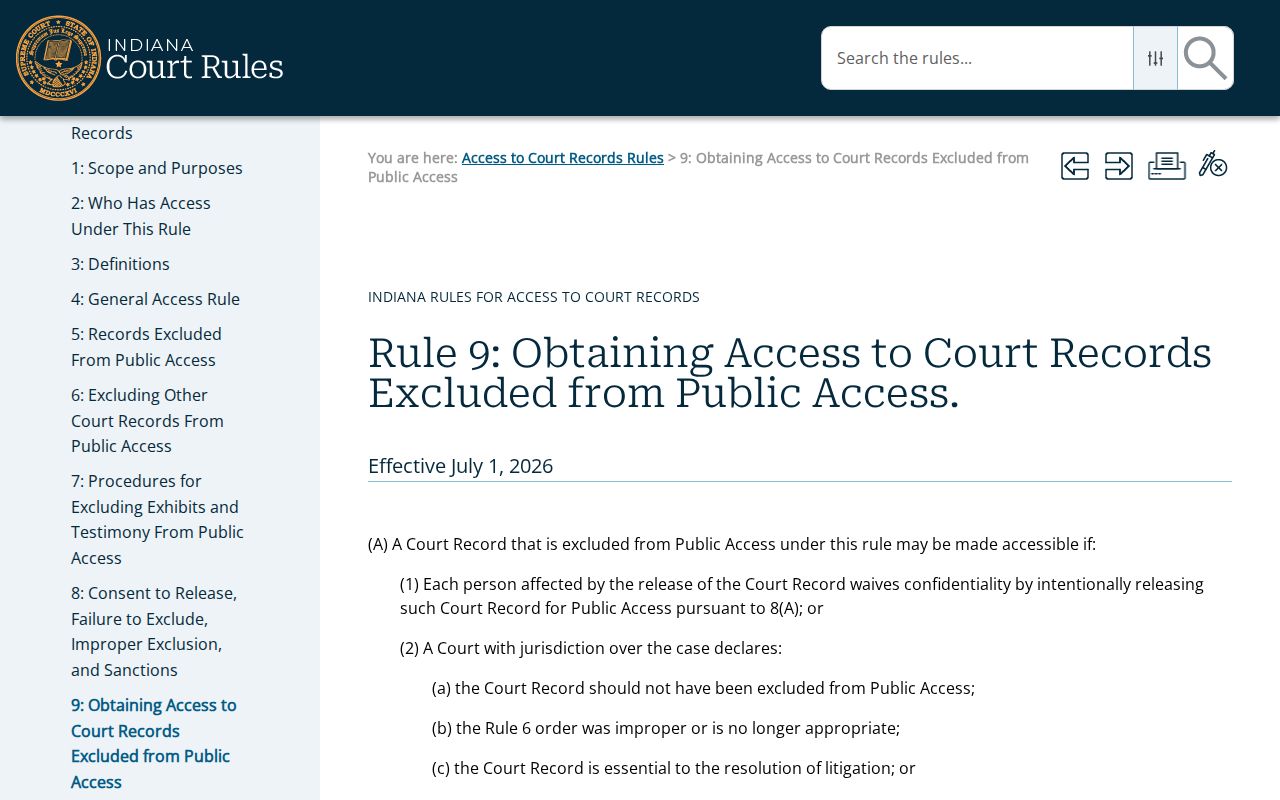
Indiana Access to Court Records Rule 4 starts from the other direction. Most court records are open unless something closes them. A rule, a statute, or a court order must do the excluding. Rule 5 then lists the categories that are confidential. For excluded material, Rule 9 offers a way in. You file a verified petition asking a court for extraordinary access. The record stays confidential while the petition is pending. Notice to affected parties and a 20-day response period can apply. The court must explain its decision in a written order with findings.
Court staff can identify the governing process, but they cannot decide eligibility or draft a Rule 9 petition for a requester.
The official extraordinary-access rule makes clear this is a court petition, not a routine copy order at the counter.
For a Lawrence County case, go to the clerk or the court with jurisdiction. Follow whatever filing process that office states.
Preparing a Lawrence County Request
A written request for Lawrence County court records works best when it spells things out. Identify yourself and give a contact method. Name the Lawrence County court, the cause number or party names, the document title, and its date. Say whether you want a plain copy or a certified one. Add your preferred delivery method and ask how to send payment. These fields are practical suggestions, not an official Lawrence County form. The court publishes no dedicated copy-request form.
Call the clerk before you mail anything. Confirm the page count, the certification language, the charge, and the delivery estimate. Also ask whether you need a self-addressed envelope or advance payment. The clerk posts no mail turnaround time, no fax-copy procedure, and no email address for requests. Payment options come from the county FAQ: cash, money order, cashier's check, and employer's check. Personal checks are rejected. Credit, debit, and prepaid debit cards work. But an added service fee applies, and its amount is not published.
Be precise about the document. Asking for "the docket" points the clerk to the CCS. Asking for a signed order means naming that order and its CCS date. Certified copies require the clerk's authentication. A transcript of what was said at a hearing belongs to the court reporter. An exhibit may stay with the file or the court reporter. It can carry its own access limits. Clear wording keeps a request from landing with the wrong office.
Lawrence County Bulk Record Access
One case and thousands of cases travel different roads. A person who wants a single public Lawrence County case starts with MyCase and the clerk. Bulk or compiled court information goes elsewhere. Administrative Rule 9(F) routes it to the Indiana Office of Judicial Administration by written request. The state may attach a fee, contract terms, or use limits. Do not treat the Lawrence County Clerk as a local bulk-data export service. The office keeps individual trial-court files, but that is not the same thing.
Extraordinary access is not bulk access either. Rule 9's verified petition targets excluded material, while Rule 9(F) covers compiled information. Neither path converts a confidential record into an ordinary counter copy. Figure out which route fits the real need before filing or paying.